
If you’ve been dealing with persistent back pain, neck discomfort, or sciatica that just won’t quit, you’ve probably tried everything from ice packs to stretching routines. Maybe you’ve even wondered if surgery is your only option. But before you go down that road, there’s a gentle, non-invasive therapy that’s helping people right here in North Hampton, NH find real relief: spinal decompression therapy. This specialized treatment works with your body’s natural healing abilities to address the root causes of many common spine problems. At Arsenault Family Chiropractic Center, Dr. Mark Arsenault uses spinal decompression therapy as part of a comprehensive approach to helping patients recover function, reduce pain, and get back to the activities they love. In this article, we’ll explore seven powerful ways spinal decompression therapy can benefit your spine and support your overall spinal health.
What is spinal decompression therapy? Spinal decompression therapy is a non-surgical treatment that gently stretches the spine using a specialized table or device. This controlled stretching creates negative pressure within the spinal discs, which can help bulging or herniated discs retract, promote nutrient-rich fluid movement into the discs, and relieve pressure on compressed nerves.
Table of Contents
- Understanding Spinal Compression and Why It Matters
- 7 Ways Spinal Decompression Therapy Can Help Your Spine
- How Chiropractic Care and Spinal Decompression Work Together
- What to Expect During Spinal Decompression Therapy
- Practical Tips to Support Your Spinal Health
- When to See a Chiropractor for Spinal Decompression
- Treatment Comparison: Spinal Decompression vs. Other Approaches
- Myths vs. Facts About Spinal Decompression Therapy
- Final Thoughts from Arsenault Family Chiropractic Center
Understanding Spinal Compression and Why It Matters
Your spine is an incredible structure. It supports your entire body, protects your spinal cord, and allows for a remarkable range of movement. But between each vertebra sits a cushioning disc made of tough outer fibers and a gel-like center. These discs act as shock absorbers, allowing your spine to bend, twist, and handle daily stress.
Over time, factors like aging, poor posture, repetitive movements, injuries, and degenerative conditions can cause these discs to compress, bulge, or herniate. When this happens, the space between vertebrae narrows. Nerves can become pinched. Inflammation increases. And suddenly, you’re dealing with pain that radiates down your leg, numbness in your hands, or a constant ache in your lower back.
Compression doesn’t just affect the discs themselves. It impacts the surrounding muscles, ligaments, and nerves. It can alter your posture and limit your mobility. Many people in North Hampton and surrounding New Hampshire communities live with these issues for months or even years, thinking they just have to accept the discomfort as part of getting older.
But here’s the good news: spinal compression problems often respond very well to conservative, non-surgical care. That’s where spinal decompression therapy comes in. By gently creating space within the spine, this therapy addresses the mechanical problem at its source, giving your body the environment it needs to heal naturally.
7 Ways Spinal Decompression Therapy Can Help Your Spine
1. Relieves Pressure on Compressed Nerves
When a disc bulges or herniates, it can press against nearby spinal nerves. This pressure causes the sharp, shooting pain that travels down your arms or legs—what we often call sciatica or radiculopathy. Spinal decompression therapy creates negative pressure inside the disc space, which can help the bulging material retract away from the nerve.
Research published in orthopedic and rehabilitation journals suggests that this mechanical unloading can provide significant relief for nerve-related pain. Many patients at Arsenault Family Chiropractic Center report a noticeable reduction in radiating pain after starting decompression sessions. While results vary from person to person, the goal is always the same: take pressure off the nerve so your body can function normally again.
2. Promotes Nutrient Flow Into Damaged Discs
Your spinal discs don’t have their own blood supply. Instead, they rely on a process called imbibition—basically, they absorb nutrients and fluids from surrounding tissues through movement and changes in pressure. When discs are chronically compressed, this nutrient exchange is limited. The disc tissue can become dehydrated and less able to repair itself.
Spinal decompression creates a vacuum effect that draws water, oxygen, and healing nutrients back into the disc. This improved circulation supports the body’s natural repair processes. Over time, this can help restore disc height and improve the overall health of the disc tissue. Think of it like watering a plant that’s been too dry—given the right conditions, your discs can begin to rehydrate and function better.
3. Reduces Inflammation in the Spine
Inflammation is your body’s natural response to injury, but chronic inflammation around the spine can perpetuate pain and stiffness. When discs are compressed and irritated, inflammatory chemicals accumulate in the tissues. These substances sensitize pain receptors and contribute to the cycle of discomfort.
By reducing mechanical stress and improving fluid movement, spinal decompression can help decrease inflammation. As the disc moves away from irritated nerves and tissues, the inflammatory response naturally calms down. This creates a better healing environment. Patients often notice not just less pain, but also improved flexibility and easier movement as inflammation subsides.
4. Helps Address Herniated and Bulging Discs
A herniated disc occurs when the inner gel-like material pushes through the tough outer layer of the disc. A bulging disc happens when the disc extends beyond its normal boundary but the outer layer remains intact. Both conditions can cause significant pain and nerve compression.
Spinal decompression is specifically designed to address these disc problems. The controlled stretching creates a negative intradiscal pressure, which can encourage herniated or bulging disc material to retract toward the center of the disc. While not every herniation responds the same way, evidence indicates that many patients with disc-related back pain experience meaningful improvement with decompression therapy.
Here in North Hampton, Dr. Mark Arsenault evaluates each patient individually to determine if spinal decompression is appropriate for their specific disc condition. It’s not a one-size-fits-all solution, but for many people dealing with disc problems, it offers a conservative alternative worth exploring before considering more invasive interventions.
5. Improves Spinal Mobility and Range of Motion
When your spine hurts, your body naturally guards and protects the area. Muscles tighten. Movement becomes restricted. Over time, this protective response can lead to stiffness and loss of range of motion. You might find it harder to bend forward, rotate your torso, or even stand up straight without discomfort.
Spinal decompression helps break this cycle. As pain decreases and nerve pressure is relieved, your body feels safer moving. The gentle stretching during treatment also helps maintain and improve spinal mobility. Many patients notice that everyday activities—like getting in and out of the car, reaching for items on a shelf, or playing with their kids—become easier as their treatment progresses.
Improved mobility isn’t just about comfort. It’s about function. It’s about being able to live your life without constantly thinking about your back. That’s what we aim for at Arsenault Family Chiropractic Center—not just pain relief, but restored function and quality of life.
6. Supports Long-Term Spinal Health and Disc Integrity
One of the most valuable aspects of spinal decompression is its potential to support long-term spinal health. Rather than masking symptoms, this therapy addresses underlying mechanical problems. By improving disc height, nutrient flow, and pressure distribution, decompression can help slow or potentially halt the progression of degenerative disc disease.
Think of it as preventive maintenance for your spine. Just like regular oil changes help your car engine last longer, regular attention to spinal health can help preserve the integrity of your discs and joints. While we can’t turn back the clock or reverse all age-related changes, we can create conditions that support the healthiest possible spine for your body.
This is especially important for people with jobs that put repetitive stress on the spine—construction workers, nurses, office workers, and anyone who spends long hours sitting or lifting. Protecting your discs now can pay dividends for years to come.
7. Offers a Non-Surgical, Drug-Free Pain Relief Option
Perhaps the most compelling benefit of spinal decompression therapy is what it doesn’t involve: no surgery, no medications, no injections. For many people dealing with chronic back pain or sciatica, the usual progression involves escalating interventions—stronger pain medications, steroid injections, and eventually surgery.
Spinal decompression offers a different path. It’s a conservative, low-risk option that can be tried before considering more invasive treatments. Clinical guidelines from organizations like the American College of Physicians and NICE (National Institute for Health and Care Excellence) increasingly recommend conservative, non-pharmacological approaches as first-line treatments for low back pain.
At Arsenault Family Chiropractic Center, we see patients every week who are relieved to find an option that works with their body’s natural healing ability. There’s no downtime, no surgical risks, and no medication side effects to manage. For many, that makes all the difference in their willingness to seek care and stick with treatment.
How Chiropractic Care and Spinal Decompression Work Together
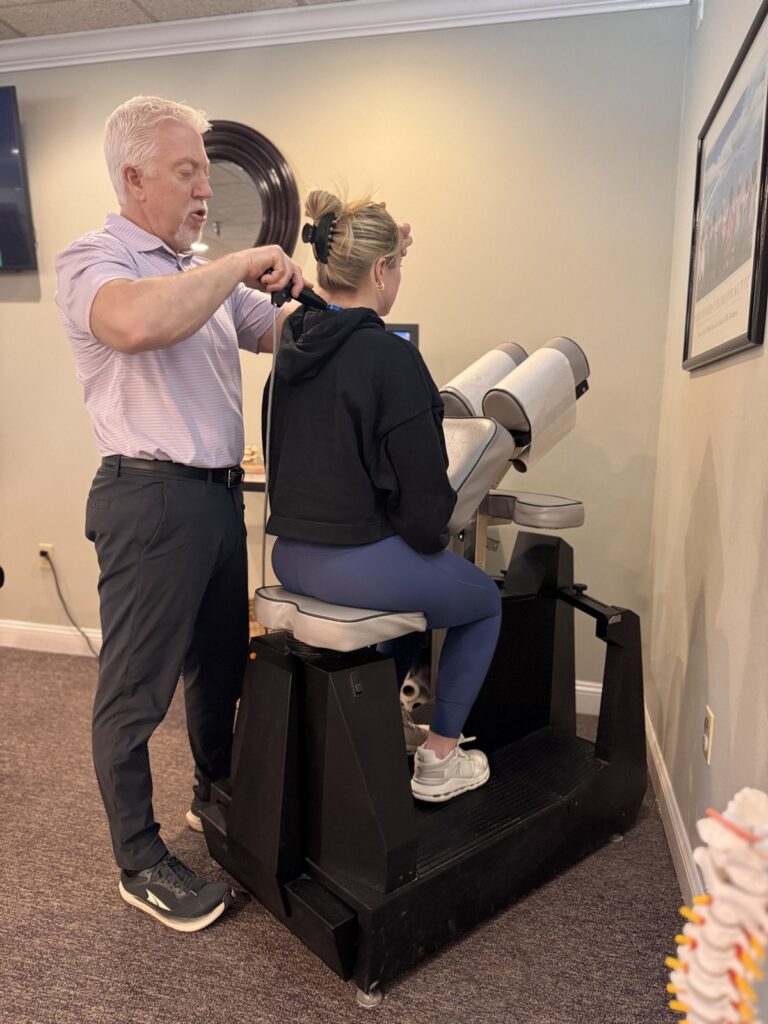
Spinal decompression doesn’t exist in isolation. It’s most effective when integrated into a comprehensive chiropractic care plan. At Arsenault Family Chiropractic Center in North Hampton, Dr. Mark Arsenault combines decompression therapy with other proven chiropractic techniques to address the whole picture of spinal health.
Chiropractic adjustments help restore proper alignment and movement to spinal joints. When vertebrae are misaligned or not moving correctly, it can contribute to disc stress and nerve irritation. Adjustments correct these biomechanical problems, creating a better foundation for healing.
Soft tissue work, therapeutic exercises, and ergonomic education complement decompression by addressing muscle imbalances, improving core stability, and helping you avoid movements or positions that aggravate your condition. This multifaceted approach gives your spine the best chance to recover and stay healthy.
During your initial consultation, you’ll receive a thorough evaluation to determine if spinal decompression is appropriate for your specific condition. Not everyone is a candidate, and that’s okay. The goal is always to find the right combination of treatments for your unique situation. If decompression is recommended, you’ll receive a personalized treatment plan that outlines the frequency and duration of sessions based on your needs.
What to Expect During Spinal Decompression Therapy
If you’ve never experienced spinal decompression, you might be wondering what it’s actually like. The good news is that most patients find it comfortable and even relaxing.
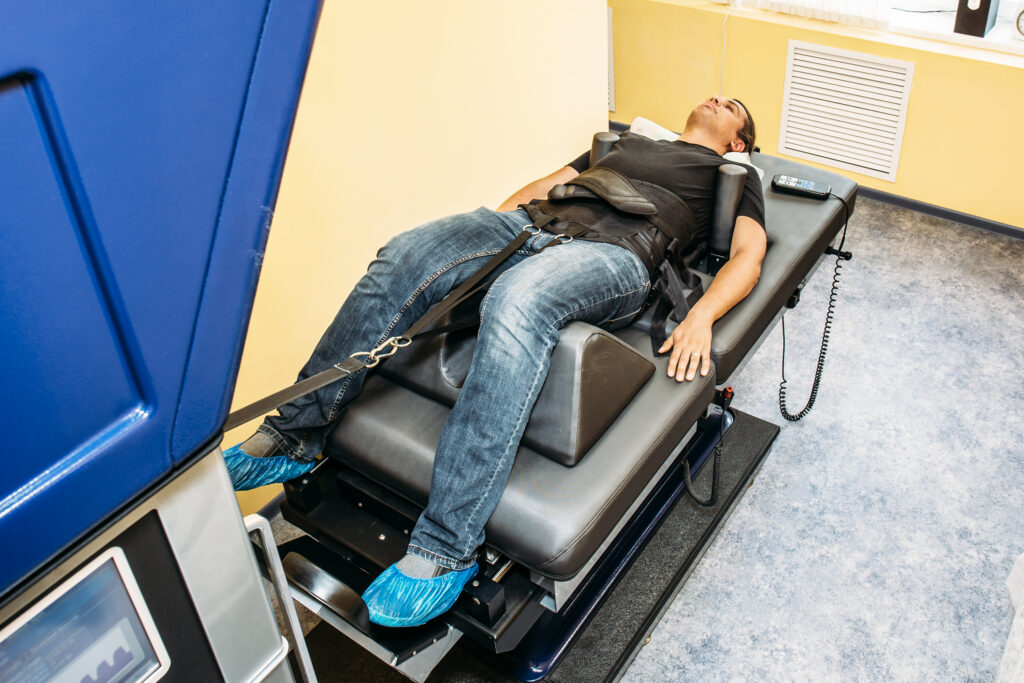
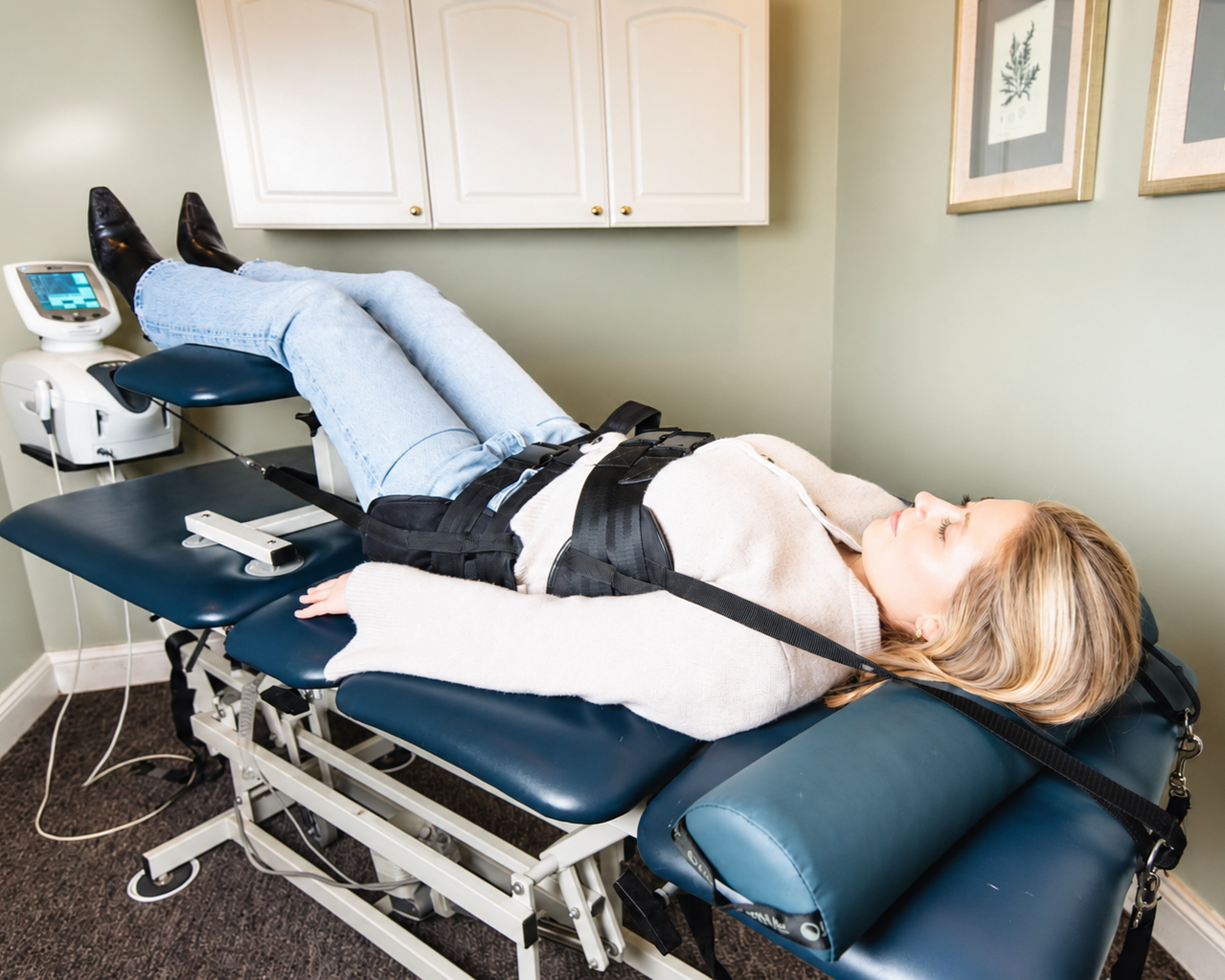
During a typical session, you’ll be positioned on a specialized decompression table. A harness is gently secured around your hips (for lower back treatment) or your head (for neck treatment). The table uses a computer-controlled system to apply gentle, intermittent stretching forces to your spine. This creates the negative pressure needed to decompress the discs.
Sessions typically last between 20 to 30 minutes. You might feel a gentle pulling or stretching sensation, but it shouldn’t be painful. Many patients relax, listen to music, or even doze off during treatment. The equipment is designed to be safe and precise, adjusting the pull according to your specific treatment plan.
Most treatment plans involve multiple sessions over several weeks. This gradual approach allows your body to respond and adapt. Some people notice improvement after just a few sessions, while others require more time. Consistency is important—showing up for your scheduled appointments gives your spine the best opportunity to heal.
Practical Tips to Support Your Spinal Health
While spinal decompression therapy can be highly effective, the results are even better when combined with healthy daily habits. Here are some practical, evidence-based tips to support your spine between appointments:
Pay attention to your posture. Whether you’re sitting at a desk, driving, or standing in line, proper posture reduces unnecessary stress on your discs. Keep your shoulders back, your head balanced over your spine, and avoid slouching. If you work at a computer, position your monitor at eye level and keep your feet flat on the floor.
Move regularly throughout the day. Prolonged sitting increases disc pressure and can aggravate back problems. Set a timer to remind yourself to stand up, stretch, and walk around every 30 to 45 minutes. Even a minute or two of movement can make a difference.
Practice proper lifting mechanics. When picking up objects, bend at your hips and knees—not your waist. Keep the load close to your body and avoid twisting while lifting. Poor lifting technique is a common cause of disc injuries.
Stay hydrated. Remember, your spinal discs rely on fluid exchange for nutrition and health. Drinking adequate water throughout the day supports this process. Aim for at least eight glasses of water daily, more if you’re active or it’s hot outside.
Maintain a healthy weight. Extra body weight increases the load on your spine, particularly your lower back. Even modest weight loss can significantly reduce spinal stress and improve outcomes from decompression therapy.
Strengthen your core muscles. Your abdominal and back muscles provide crucial support for your spine. Simple exercises like planks, bridges, and bird dogs can build core stability. Ask Dr. Mark Arsenault or a member of the care team at Arsenault Family Chiropractic Center for exercise recommendations appropriate for your condition.
When to See a Chiropractor for Spinal Decompression
How do you know if spinal decompression therapy might be right for you? Here are some signs that it’s time to schedule a consultation:
Persistent pain despite conservative care. If you’ve tried rest, over-the-counter pain relievers, ice, heat, and stretching but your back or neck pain persists beyond a few weeks, it’s time to seek professional evaluation.
Radiating pain into your arms or legs. Sharp, shooting pain that travels down your arm or leg is often a sign of nerve compression. Sciatica, in particular, responds well to spinal decompression in many cases.
Numbness or tingling sensations. These symptoms suggest nerve involvement and shouldn’t be ignored. Early intervention can prevent more serious complications.
Difficulty with daily activities. If your back or neck pain is interfering with work, exercise, sleep, or family activities, professional care can help you get back to normal function.
Diagnosis of a herniated or bulging disc. If you’ve had imaging studies showing disc problems, spinal decompression may be an appropriate conservative treatment option before considering surgery.
That said, there are also red flag symptoms that require immediate medical attention. Seek emergency care if you experience loss of bowel or bladder control, progressive weakness in your legs, severe pain following trauma, unexplained weight loss with back pain, or fever along with back pain. These can indicate serious conditions that need urgent evaluation.
For most people in North Hampton dealing with common spinal problems, a consultation at Arsenault Family Chiropractic Center is a great first step. Dr. Mark Arsenault will perform a thorough examination, review your history, and determine if spinal decompression is appropriate for your situation.
Treatment Comparison: Spinal Decompression vs. Other Approaches
| Treatment Approach | How It Works | Pros | Cons |
|---|---|---|---|
| Spinal Decompression Therapy | Gently stretches spine to create negative disc pressure and relieve nerve compression | Non-invasive, drug-free, addresses underlying disc problems, minimal risk | Requires multiple sessions, not appropriate for all conditions, results vary |
| Pain Medication | Blocks pain signals or reduces inflammation | Quick symptom relief, widely available | Doesn’t address root cause, potential side effects, risk of dependency |
| Steroid Injections | Delivers anti-inflammatory medication directly to affected area | Can provide significant short-term relief | Invasive, temporary results, risks include infection and tissue damage |
| Surgery | Physically removes or repairs damaged disc tissue | Can provide definitive correction in severe cases | Invasive, significant recovery time, surgical risks, no guarantee of success |
| Physical Therapy | Uses exercise, stretching, and manual therapy to improve function | Builds strength and stability, teaches self-care strategies | May not directly address disc compression, requires active participation |
Myths vs. Facts About Spinal Decompression Therapy
Myth: Spinal decompression is the same as inversion tables you can buy at home
Fact: While both involve stretching the spine, professional spinal decompression uses computerized equipment that applies precise, controlled force to specific spinal segments. Inversion tables provide generalized traction and lack the targeted, calibrated approach of clinical decompression therapy. Professional treatment is tailored to your condition and monitored for safety and effectiveness.
Myth: Spinal decompression is painful
Fact: Most patients find spinal decompression comfortable and relaxing. You may feel a gentle stretching sensation, but the treatment should not cause pain. The equipment is designed to work gradually and gently, and sessions can be adjusted based on your comfort level. Many patients actually look forward to their sessions as a calming break in their day.
Myth: You’ll need decompression therapy forever to maintain results
Fact: Spinal decompression is typically provided in a series of treatments over several weeks. The goal is to facilitate healing, after which you transition to maintenance care, exercises, and lifestyle modifications to preserve your progress. While some patients choose periodic maintenance sessions, ongoing daily or weekly treatment isn’t usually necessary once you’ve completed your initial care plan.
Myth: If decompression doesn’t work immediately, it won’t work at all
Fact: Healing takes time, especially when dealing with disc problems that may have developed over months or years. Most treatment plans involve multiple sessions because the body needs time to respond, rehydrate disc tissue, and repair damaged structures. Some patients notice improvement quickly, while others require more time. Consistency and patience are important factors in successful outcomes.
Myth: Spinal decompression can cure any back problem
Fact: Spinal decompression is an effective tool for certain conditions, particularly those involving disc problems and nerve compression. However, it’s not appropriate for every spinal condition. Fractures, tumors, severe osteoporosis, pregnancy, and certain other conditions are contraindications for decompression therapy. A thorough evaluation determines whether you’re a good candidate for this type of care.
Final Thoughts from Arsenault Family Chiropractic Center
Living with chronic back pain, sciatica, or neck problems can be exhausting and frustrating. It affects not just your physical comfort, but your mood, your relationships, and your ability to enjoy life. You deserve better. Here in North Hampton, New Hampshire, our community is full of active, engaged people who want to stay healthy and keep doing the things they love—and spinal decompression therapy is helping many of them do exactly that.
At Arsenault Family Chiropractic Center, Dr. Mark Arsenault and the care team are committed to providing evidence-based, compassionate care that addresses the root causes of spinal problems. Spinal decompression is just one of the tools in our comprehensive approach to helping you feel and function better. Whether you’re dealing with a recent injury, chronic pain that’s been bothering you for years, or you simply want to take better care of your spine, we’re here to help.
If you’re curious whether spinal decompression might be right for you, the best next step is to schedule a consultation. We’ll take the time to understand your unique situation, examine your spine, and create a personalized care plan designed around your goals and needs. You don’t have to live with pain, and you don’t have to rush into surgery or rely on medications. There are effective, conservative options available right here in North Hampton.
Your spine supports everything you do. Taking care of it is one of the most important investments you can make in your long-term health and quality of life. We look forward to helping you on that journey.
Frequently Asked Questions
How long does each spinal decompression session take?
Most spinal decompression sessions last between 20 to 30 minutes. The entire appointment, including setup and any additional therapies, typically takes about 45 minutes to an hour. Sessions are scheduled to fit comfortably into your day without requiring significant time away from work or other responsibilities.
How many treatments will I need?
Treatment plans vary based on your specific condition, severity, and how your body responds to care. Many patients undergo 15 to 25 sessions over four to six weeks. Dr. Mark Arsenault will create a personalized plan for you and adjust it as needed based on your progress.
Is spinal decompression covered by insurance?
Coverage varies depending on your specific insurance plan. Some plans cover spinal decompression as part of chiropractic care, while others may not. The team at Arsenault Family Chiropractic Center can help you understand your benefits and explore payment options during your initial consultation.
Can spinal decompression help with degenerative disc disease?
Research suggests that spinal decompression can be helpful for people with degenerative disc disease by improving nutrient flow to discs and reducing pressure. While it cannot reverse all degenerative changes, many patients experience significant pain relief and improved function. A thorough evaluation will determine if it’s appropriate for your specific situation.
Are there any side effects or risks?
Spinal decompression is generally very safe when performed by trained professionals. Some patients experience mild soreness or muscle ache after early sessions, similar to what you might feel after starting a new exercise program. These effects typically resolve quickly. Serious complications are rare, especially when proper screening and technique are used.
What conditions does spinal decompression treat?
Spinal decompression is commonly used to address herniated discs, bulging discs, degenerative disc disease, sciatica, posterior facet syndrome, and certain types of chronic neck or back pain. It’s most effective for conditions involving disc problems and nerve compression. Your chiropractor will evaluate whether your specific condition is likely to respond to this therapy.
TL;DR – Key Takeaways
- Spinal decompression therapy is a non-surgical, drug-free treatment that gently stretches the spine to relieve disc pressure and nerve compression.
- It works by creating negative pressure within spinal discs, promoting nutrient flow, reducing inflammation, and encouraging herniated or bulging disc material to retract.
- Common benefits include pain relief, improved mobility, better long-term disc health, and a conservative alternative to surgery or medications.
- Treatment typically involves multiple sessions over several weeks and is most effective when combined with comprehensive chiropractic care and healthy lifestyle habits.
- If you’re experiencing persistent back pain, sciatica, or disc-related problems in North Hampton, NH, contact Arsenault Family Chiropractic Center to learn if spinal decompression therapy might be right for you.