
Shoulder pain has a way of sneaking into your daily life and making even the simplest tasks feel difficult. Reaching for something on a shelf, getting dressed in the morning, or sleeping comfortably at night can all become a challenge when your shoulder is hurting. If you’ve been dealing with persistent shoulder discomfort, you’re not alone — it’s one of the most common musculoskeletal complaints we see here at Arsenault Family Chiropractic Center in North Hampton, NH. The good news is that understanding what’s driving your pain is the first step toward finding real, lasting relief.
What causes shoulder pain? Shoulder pain can stem from a wide variety of sources, including muscle strain, joint dysfunction, nerve irritation, postural imbalances, and overuse injuries. Because the shoulder is one of the most mobile joints in the body, it’s also one of the most vulnerable to stress and dysfunction.
What Is Shoulder Pain and Why Is It So Common?
The shoulder is an incredibly complex structure. It’s made up of three bones — the humerus (upper arm), the scapula (shoulder blade), and the clavicle (collarbone) — along with a network of muscles, tendons, ligaments, bursae, and nerves. All of these components work together to give your shoulder its remarkable range of motion.
But that mobility comes at a cost. Because the shoulder sacrifices structural stability for flexibility, it depends heavily on the surrounding soft tissues to stay aligned and functional. When any part of that system becomes strained, inflamed, or misaligned, pain is often the result. Add in the postural demands of modern life — long hours at a desk, frequent smartphone use, and repetitive overhead movements — and it’s easy to see why shoulder pain is so widespread.
Here in North Hampton, NH, Dr. Mark Arsenault regularly sees patients whose shoulder pain developed gradually over time, often without any single traumatic event. That’s a key point worth understanding: shoulder pain doesn’t always start with an injury. Sometimes it builds slowly as a result of daily habits and postural patterns that place ongoing stress on the joint.
Common Causes of Shoulder Pain
There are many potential causes of shoulder pain, and getting the right answer requires a thorough evaluation. That said, some causes are far more common than others. Below is a detailed look at the most frequent culprits.
Rotator Cuff Injuries
The rotator cuff is a group of four muscles and their associated tendons that surround the shoulder joint. These muscles stabilize the head of the humerus within the socket and help guide shoulder movement. Rotator cuff injuries — including strains, partial tears, and full tears — are among the most common causes of shoulder pain in adults. They often result from repetitive overhead activities, sudden trauma, or age-related degeneration. Pain is typically felt deep in the shoulder and may worsen with lifting, reaching, or lying on the affected side.
Rotator Cuff Tendinitis and Impingement Syndrome
Tendinitis refers to inflammation within a tendon, and the rotator cuff tendons are particularly prone to this problem. When the tendons become inflamed and swell, they can get pinched between the bones of the shoulder — a condition called impingement syndrome. This is extremely common in people who perform repetitive overhead motions, whether in sports, occupational tasks, or gym training. The result is a sharp or aching pain, especially when raising the arm above shoulder height.
Bursitis
Bursae are small fluid-filled sacs that cushion the joints and reduce friction between moving tissues. The shoulder has several bursae, and the subacromial bursa is the most commonly affected. When it becomes inflamed — a condition called bursitis — it can cause significant shoulder pain and tenderness, particularly with movement. Bursitis often accompanies tendinitis and impingement, as the underlying cause is frequently similar: overuse or postural stress.
Cervical and Thoracic Spine Dysfunction
Not all shoulder pain actually originates in the shoulder. The nerves that travel into the shoulder and arm exit from the cervical spine (neck) and upper thoracic spine (mid-back). When there is misalignment, joint restriction, or nerve irritation in these areas, pain can radiate into the shoulder and down the arm. This is sometimes called referred pain. Dr. Mark Arsenault at Arsenault Family Chiropractic Center pays close attention to spinal function when evaluating shoulder pain because addressing the root cause — even if it’s in the neck — is essential for meaningful recovery.
Frozen Shoulder (Adhesive Capsulitis)
Frozen shoulder is a condition in which the connective tissue surrounding the shoulder joint becomes inflamed and thickened, leading to significant stiffness and restricted motion. It often develops gradually and progresses through stages, starting with pain and progressing to increasing stiffness. While the exact cause isn’t always clear, it’s more common in people who have experienced prolonged immobility of the shoulder, certain systemic conditions like diabetes, or who are between the ages of 40 and 60.
Postural Imbalances and Muscle Weakness
Poor posture is one of the most underappreciated contributors to shoulder pain. When the shoulders round forward — a pattern often driven by prolonged sitting, desk work, or device use — the mechanics of the entire shoulder girdle are altered. Muscles in the front of the chest and shoulders become tight and overactive, while the muscles of the upper back and rotator cuff become weak and underused. This imbalance places abnormal stress on the shoulder joint and can contribute to impingement, pain, and dysfunction over time.
Shoulder Joint Instability
Some individuals experience shoulder instability, meaning the ball of the shoulder joint moves too freely within the socket. This can result from ligament laxity, prior dislocation, or muscle weakness. Even minor instability can lead to chronic aching, a sense of the shoulder “giving way,” and recurring pain with activity.
Symptoms and Warning Signs to Watch For
Shoulder pain presents differently depending on its underlying cause, and the quality, location, and timing of your symptoms can offer important clues. Dull, achy pain that worsens with certain movements often points to a tendinitis or impingement issue. Sharp pain that occurs suddenly may suggest a more acute strain or injury. Pain that radiates down the arm or is accompanied by numbness and tingling may indicate cervical nerve involvement rather than a problem isolated to the shoulder joint itself.
Stiffness that limits your ability to raise your arm, reach overhead, or rotate the shoulder could suggest bursitis, a capsular problem, or the early stages of frozen shoulder. Weakness in the arm or an inability to perform everyday tasks — like lifting a bag or reaching behind your back — may indicate rotator cuff involvement and warrants prompt evaluation.
Any shoulder pain that is accompanied by chest tightness, shortness of breath, or pain radiating to the jaw should be evaluated by emergency medical care immediately, as these symptoms can indicate a cardiac event.
How Chiropractic Care Fits Into Shoulder Pain Recovery
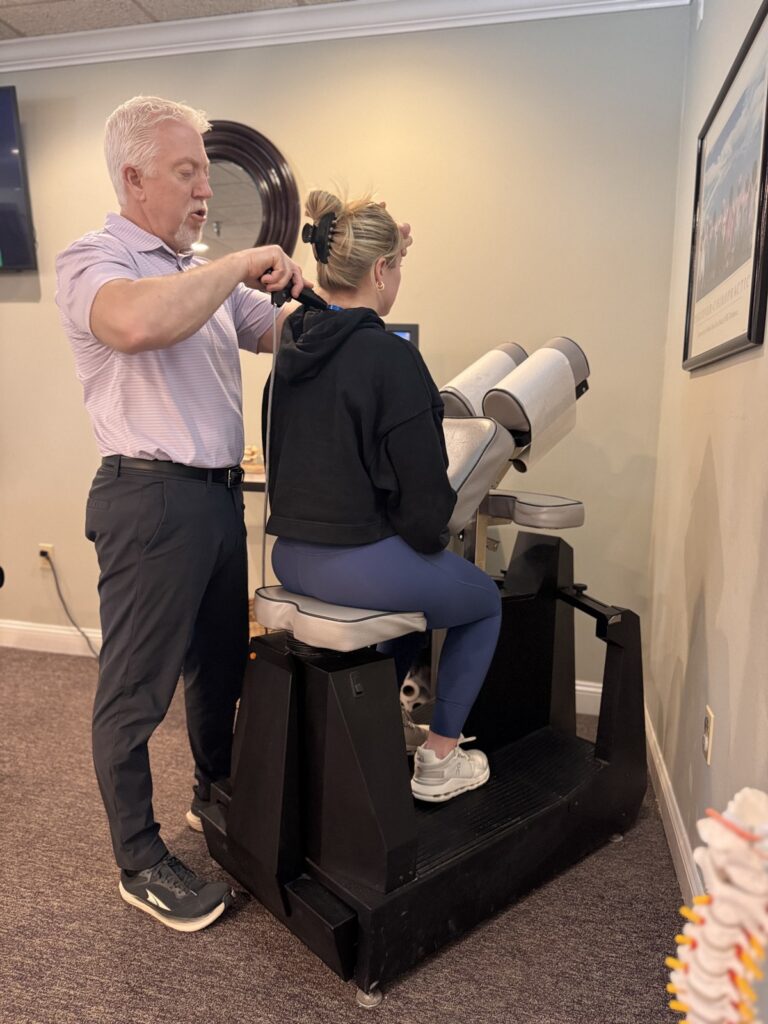
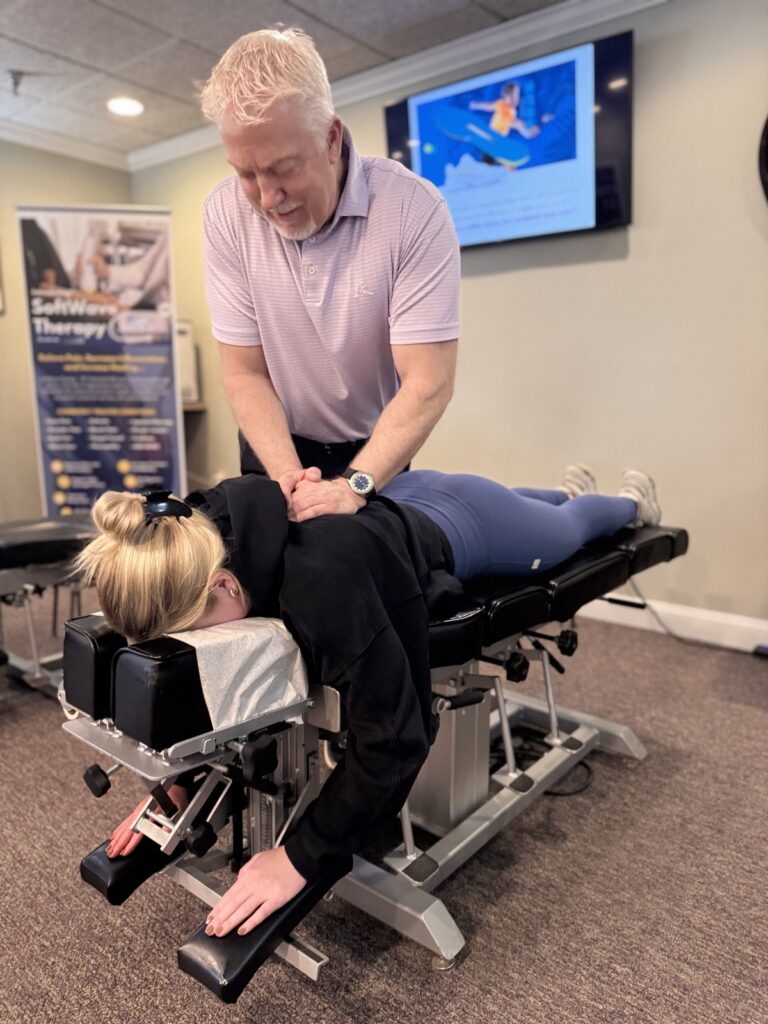
Chiropractic care offers a non-invasive, drug-free approach to evaluating and managing many common causes of shoulder pain. At Arsenault Family Chiropractic Center in North Hampton, NH, Dr. Mark Arsenault takes a whole-body approach to shoulder complaints — meaning he doesn’t just look at the shoulder in isolation. He assesses the cervical spine, thoracic spine, and surrounding musculature to understand how the entire system is functioning together.
Research suggests that spinal manipulation and manual therapy may help reduce pain and improve function in patients with shoulder-related conditions, particularly those involving neck and upper back dysfunction. The National Institutes of Health’s National Center for Complementary and Integrative Health (NCCIH) recognizes chiropractic care as a legitimate conservative approach to musculoskeletal pain management.
Chiropractic adjustments to the cervical and thoracic spine can help restore joint mobility and reduce nerve irritation that may be contributing to shoulder symptoms. Soft tissue therapies can address muscle tension and tightness around the shoulder girdle. Corrective exercises and posture guidance help retrain movement patterns that may be perpetuating the problem. Each care plan at our North Hampton practice is tailored to the individual — because no two cases of shoulder pain are exactly alike.
Practical Tips to Protect Your Shoulders Every Day
While professional evaluation is important for persistent or severe shoulder pain, there are several habits and adjustments you can make at home or at work to reduce stress on your shoulders and support recovery.
Pay attention to your sitting posture throughout the day. Aim to keep your ears aligned over your shoulders and your shoulders aligned over your hips. If you work at a desk, ensure your monitor is at eye level so you’re not consistently looking down or reaching forward. Your keyboard and mouse should allow your elbows to rest comfortably near your sides at roughly a 90-degree angle.
Avoid sleeping on your stomach with your arm raised overhead for extended periods, as this position can place prolonged strain on the rotator cuff tendons and shoulder capsule. If you tend to sleep on your side, using a pillow between your arm and torso can help keep the shoulder in a more neutral position.
Be mindful of how often you’re reaching overhead or across your body without warming up first. If your work or activity involves repetitive shoulder movements, building in regular breaks and gentle range-of-motion movements can help prevent cumulative strain. Strengthening the muscles of the upper back — particularly the rhomboids, lower trapezius, and serratus anterior — can go a long way toward maintaining healthy shoulder mechanics over time.
When to See a Chiropractor for Shoulder Pain
If your shoulder pain has persisted for more than a week or two without improvement, it’s worth having it professionally evaluated. Many people assume shoulder pain will simply go away on its own, but when the underlying cause isn’t addressed, the condition can worsen or become chronic. Dr. Mark Arsenault at Arsenault Family Chiropractic Center encourages North Hampton residents not to wait too long before seeking care — early intervention is almost always more effective than treating a long-standing problem.
Signs that it’s time to schedule an evaluation include pain that limits your range of motion or daily function, pain that wakes you up at night, recurring pain that keeps coming back despite rest, and weakness or instability in the arm or shoulder. If you’ve noticed numbness or tingling traveling down the arm into the hand and fingers, that’s another important sign that the nervous system may be involved, and evaluation is especially important.
As mentioned above, shoulder pain accompanied by chest pain, difficulty breathing, or jaw pain is a medical emergency and should be treated as such — please call emergency services in that situation rather than a chiropractic office.
Shoulder Pain Causes at a Glance
|
Cause |
Common Symptoms |
Common Triggers |
Chiropractic Relevance |
|---|---|---|---|
|
Rotator Cuff Tendinitis / Impingement |
Aching pain, worsens with overhead motion |
Repetitive overhead activity, poor posture |
High — soft tissue and postural care often help |
|
Bursitis |
Deep shoulder tenderness, pain with movement |
Overuse, direct pressure, postural stress |
Moderate — supportive care and posture correction |
|
Cervical Spine Dysfunction |
Referred shoulder/arm pain, possible tingling |
Poor neck posture, joint restriction |
High — spinal evaluation and adjustment often central |
|
Frozen Shoulder |
Progressive stiffness, limited range of motion |
Immobility, certain systemic conditions |
Moderate — gentle mobilization and supportive care |
|
Postural Imbalances |
Dull aching, tightness across shoulders/upper back |
Prolonged sitting, desk work, device use |
High — posture correction is a core chiropractic focus |
|
Shoulder Instability |
Looseness, aching, sense of “giving way” |
Prior dislocation, ligament laxity, weakness |
Moderate — stabilization exercises and evaluation |
Myths vs. Facts About Shoulder Pain
Myth: Shoulder pain always means you have a rotator cuff tear.
Fact: Rotator cuff tears are just one of many possible causes of shoulder pain. Tendinitis, bursitis, postural dysfunction, and cervical spine problems are all common causes that don’t involve a tear. A proper evaluation is the only way to know what’s actually going on.
Myth: If you can still move your shoulder, there’s nothing seriously wrong.
Fact: Many significant shoulder conditions — including partial rotator cuff tears, bursitis, and early frozen shoulder — can still allow a reasonable range of motion, at least initially. Pain, weakness, or discomfort during movement is always a sign worth taking seriously, regardless of how much range of motion you have.
Myth: Shoulder pain will go away on its own if you just rest it long enough.
Fact: While rest can help with acute, minor strains, prolonged rest without addressing the underlying cause can actually worsen some shoulder conditions. Frozen shoulder, for example, can be aggravated by immobility. Appropriate movement, guided rehabilitation, and professional care are usually more effective than extended rest alone.
Myth: Chiropractors only treat back and neck pain — they can’t help with shoulder issues.
Fact: Chiropractors are trained to assess and care for the entire musculoskeletal system, including the shoulder. Beyond directly addressing shoulder joint mechanics, chiropractors like Dr. Mark Arsenault can evaluate how spinal dysfunction in the neck and upper back may be contributing to shoulder symptoms — a connection that is often overlooked in other care settings.
Myth: You need an MRI or X-ray before you can receive any care for shoulder pain.
Fact: While imaging can be valuable in certain situations, many cases of shoulder pain are diagnosed and effectively managed based on a thorough clinical examination. Chiropractors are trained to identify red flags that warrant imaging or referral, and to provide appropriate conservative care when imaging is not immediately necessary.
Final Thoughts From Our Team in North Hampton
Shoulder pain is one of those problems that tends to get brushed aside — until it becomes impossible to ignore. Whether you’ve been managing a nagging ache for months or you’ve recently noticed your shoulder starting to limit your daily activities, please know that you have real options that don’t involve rushing toward surgery or relying on pain medication to get through the day.
At Arsenault Family Chiropractic Center, we’re proud to serve the North Hampton, NH community with honest, compassionate, evidence-informed chiropractic care. Dr. Mark Arsenault and our entire care team believe that patients deserve to understand what’s happening in their own bodies — and to feel confident about the path forward. If shoulder pain has been affecting your quality of life, we’d love the opportunity to evaluate your situation and help you get back to doing the things you love.
You don’t have to just live with shoulder pain. Help is closer than you think, right here in North Hampton.
Frequently Asked Questions About Shoulder Pain
Can a chiropractor help with shoulder pain caused by a rotator cuff injury?
In many cases, yes. Chiropractic care can support recovery from rotator cuff-related pain through soft tissue therapy, postural correction, and rehabilitation guidance. However, severe or complete tears may require co-management with other healthcare providers, and Dr. Mark Arsenault will refer appropriately when needed.
How long does it take for shoulder pain to resolve with chiropractic care?
Recovery time varies depending on the cause, severity, and duration of the shoulder pain, as well as individual factors like age and overall health. Some patients notice meaningful improvement within a few visits, while more complex or chronic conditions may require a longer course of care. Every situation is different, and your care plan will be tailored accordingly.
Could my shoulder pain actually be coming from my neck?
Absolutely — this is more common than many people realize. The nerves that supply the shoulder and arm originate in the cervical spine, and dysfunction or irritation in the neck can produce pain that is felt entirely in the shoulder. A thorough chiropractic evaluation can help determine whether the neck is contributing to your symptoms.
Is it safe to exercise with shoulder pain?
It depends on the cause and severity of the pain. Gentle, low-impact movement is often beneficial, but certain exercises can worsen specific shoulder conditions. It’s best to get an evaluation before beginning or modifying an exercise program so that your activities support your recovery rather than set it back.
What is the difference between shoulder bursitis and tendinitis?
Bursitis refers to inflammation of the bursae — small fluid-filled cushioning sacs in the shoulder — while tendinitis refers to inflammation within a tendon, most commonly the rotator cuff tendons. These two conditions often occur together and can present with similar symptoms, which is why professional evaluation is important for accurate identification.
When should I go to the ER instead of a chiropractor for shoulder pain?
If your shoulder pain is accompanied by chest pain, difficulty breathing, pain radiating to your jaw or left arm, severe trauma, or an obviously deformed joint, please seek emergency medical care immediately. These are signs that may point to a cardiac event or acute injury that requires emergency evaluation rather than chiropractic care.
TL;DR — Key Takeaways
-
Shoulder pain has many possible causes, including rotator cuff injuries, bursitis, tendinitis, cervical spine dysfunction, frozen shoulder, and postural imbalances — and proper evaluation is the only reliable way to identify the root cause.
-
Not all shoulder pain originates in the shoulder itself; the cervical and thoracic spine can refer pain into the shoulder and arm, making a full spinal assessment an important part of any shoulder evaluation.
-
Chiropractic care offers a non-invasive, drug-free approach that addresses both the shoulder and the surrounding spinal structures, often providing meaningful relief for many common shoulder conditions.
-
Daily habits like posture, workstation setup, and sleep position play a significant role in shoulder health and can either contribute to pain or support recovery.
-
Shoulder pain that persists beyond one to two weeks, limits your function, or is accompanied by neurological symptoms deserves professional evaluation — don’t wait it out indefinitely.