
If you’ve ever felt a sharp, shooting pain travel from your lower back down through your leg, you already know how disabling sciatica can be. It can turn a simple walk across the room into an exhausting ordeal, and for many people, the pain doesn’t stop there — it comes with numbness, tingling, and a frustrating sense that nothing seems to help. Here in North Hampton, NH, many patients arrive at Arsenault Family Chiropractic Center feeling overwhelmed and unsure where to turn. The good news is that sciatica and disc herniation are conditions that respond well to conservative, non-invasive care — and spinal decompression treatment is one of the most promising approaches available.
What is sciatica, and how does disc herniation cause it?
Sciatica is not a diagnosis on its own — it’s a symptom. It refers to pain, tingling, numbness, or weakness that travels along the sciatic nerve, which runs from the lower back through the hips, buttocks, and down each leg. One of the most common causes of sciatica is a herniated disc in the lumbar spine, where displaced disc material presses on or irritates a nearby nerve root. When that happens, the result can be significant pain that radiates far from the original source.
Understanding Disc Herniation
Your spine is made up of a series of bones called vertebrae, and between each vertebra sits a spinal disc. Think of these discs as small, rubbery cushions with a tough outer layer — called the annulus fibrosus — and a soft, gel-like center called the nucleus pulposus. These discs do an important job: they absorb shock, allow movement, and keep your vertebrae from grinding against one another.
A disc herniation occurs when the outer layer of a disc develops a tear or weakness, allowing the inner gel material to bulge or push outward. This can happen gradually over time due to wear and tear, or it can result from a sudden movement like lifting something heavy with poor form. The lower back — specifically the L4-L5 and L5-S1 levels — is the most common area for herniation, though it can also occur in the neck.
Disc herniations are surprisingly common, and many people actually have them without ever experiencing noticeable symptoms. It’s when that displaced material contacts a nearby nerve root that the real trouble begins. The pressure or inflammation around that nerve is what triggers the cascade of symptoms most people associate with sciatica.
How Sciatica Develops from a Herniated Disc
The sciatic nerve is the longest and widest nerve in the human body. It originates from multiple nerve roots in the lumbar and sacral spine, merges into a single nerve, and travels down through the buttock, the back of the thigh, and all the way to the foot. Because it spans such a large portion of the body, compression or irritation at its source can cause symptoms almost anywhere along that pathway.
When a herniated disc puts pressure on one of the nerve roots that feeds into the sciatic nerve, the brain interprets that pressure as pain, tingling, or numbness coming from the leg — even though the actual problem is in the spine. This is called referred pain, and it’s one reason why sciatica can be so confusing and disorienting. You might feel intense pain in your calf or foot without realizing your back is the source.
Common triggers that can worsen sciatic symptoms include prolonged sitting, bending forward, coughing or sneezing, and certain sleeping positions. Each of these can increase pressure on the lumbar discs, intensifying the nerve compression and worsening symptoms. Understanding this mechanism is important because it helps explain why movement, posture, and spinal health all play a central role in recovery.
What Is Spinal Decompression Treatment?
Spinal decompression therapy is a non-surgical, motorized traction-based treatment that gently stretches the spine in a controlled and precise way. The goal is to create negative pressure — or a gentle vacuum effect — within the disc, which can help retract herniated or bulging disc material, reduce nerve compression, and encourage the flow of oxygen, nutrients, and fluids back into the disc space.
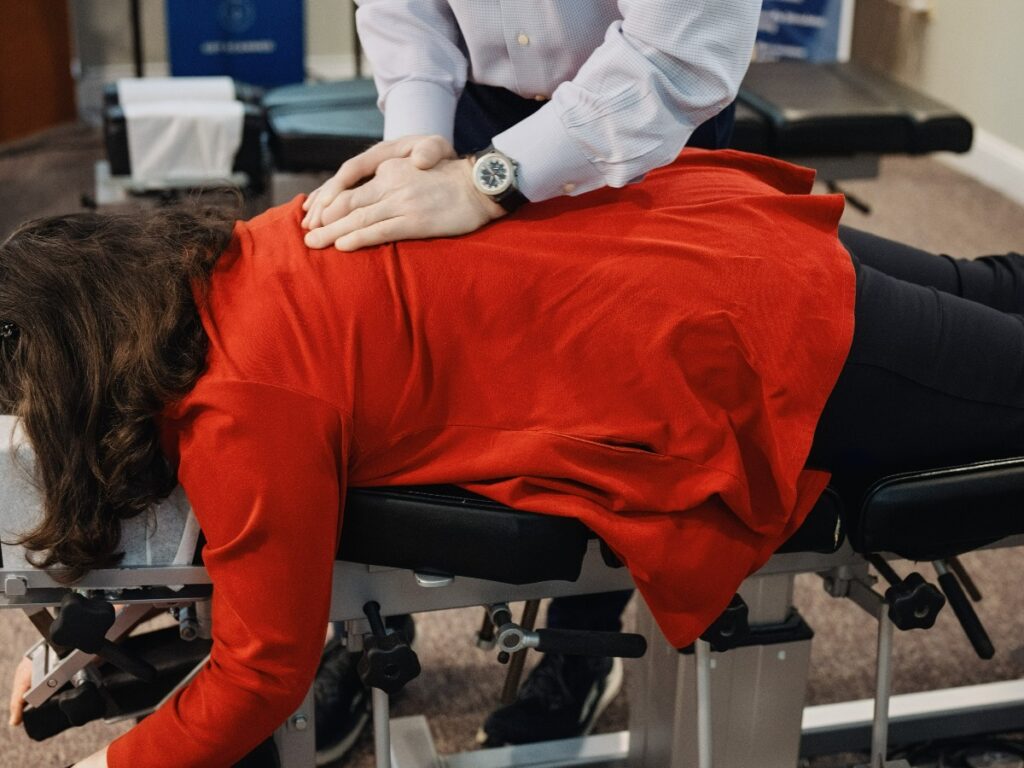
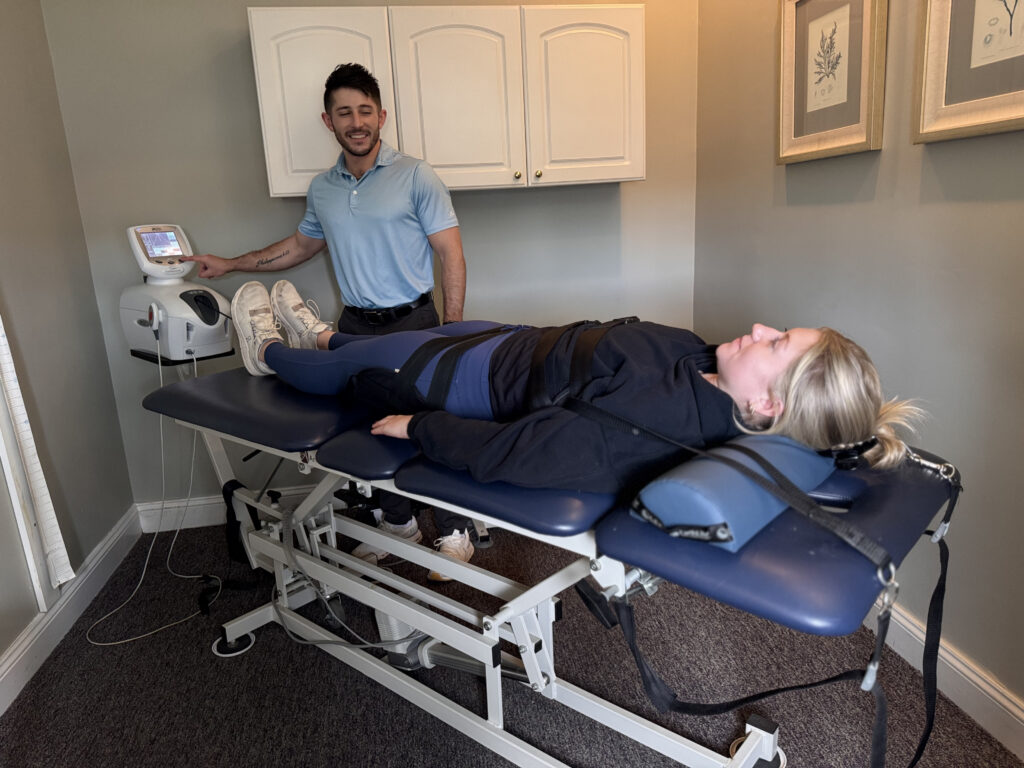
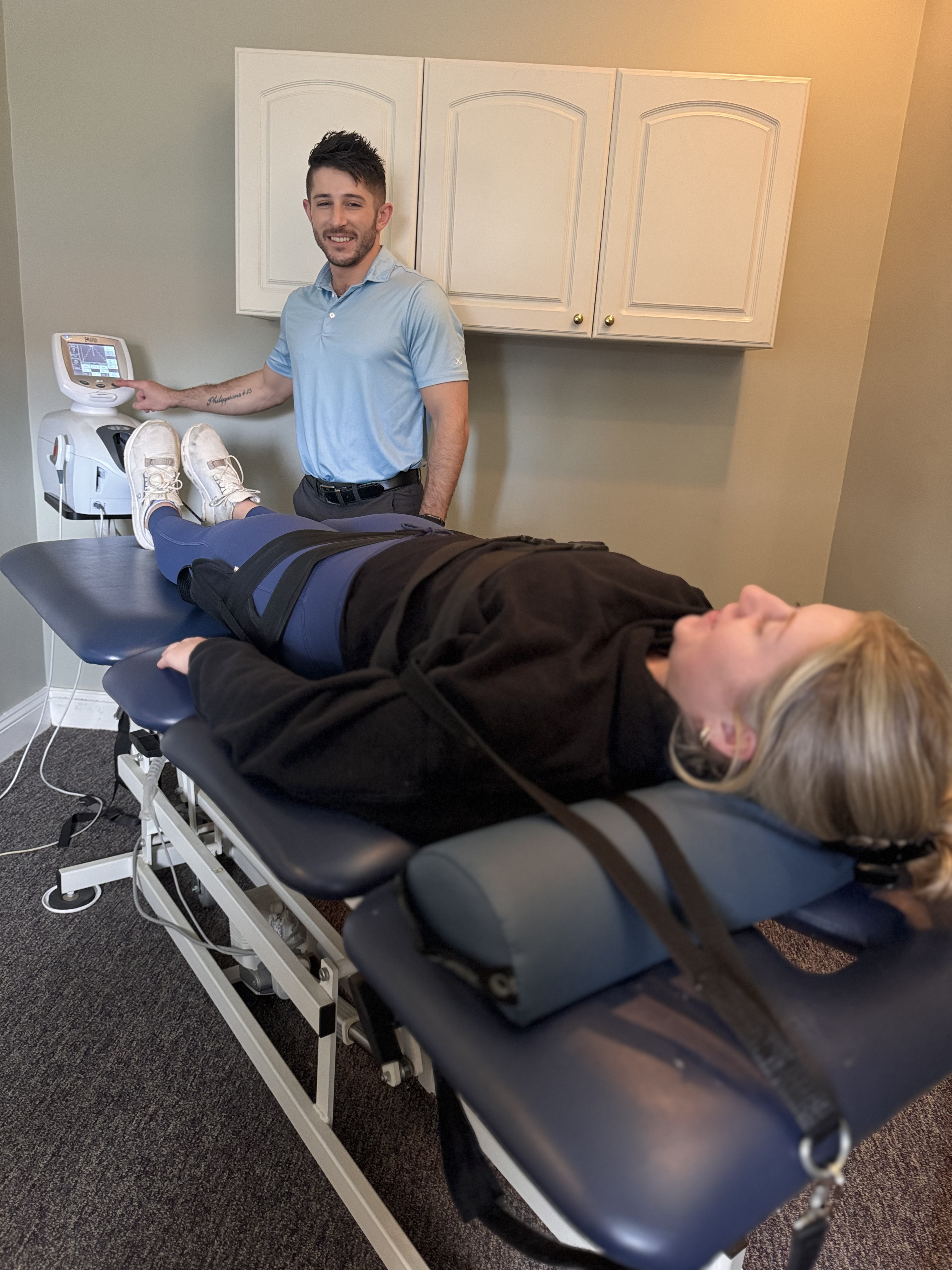
During a spinal decompression session, the patient lies on a specialized table that is controlled by a computerized system. Depending on the area being treated, a harness is positioned around the hips or upper body. The table then performs slow, rhythmic stretching movements tailored to the individual’s condition. Most patients find the experience comfortable and even relaxing — a sharp contrast to the pain that brought them in.
It’s important to understand that non-surgical spinal decompression is different from simple traction. Older manual traction techniques apply a constant pulling force, which can sometimes cause muscle guarding — meaning the surrounding muscles tighten up defensively. Computerized decompression tables work by alternating between distraction and relaxation cycles, which helps the body accept the treatment without triggering that protective response.
Research published in conservative care literature suggests that spinal decompression therapy can be beneficial for patients with lumbar disc herniations and associated radiculopathy — the clinical term for nerve pain that radiates into the limbs. While it isn’t a cure and results vary from person to person, many patients report meaningful reductions in pain and improved function after a series of treatments. At Arsenault Family Chiropractic Center, Dr. Mark Arsenault uses spinal decompression as part of a comprehensive, individualized approach — never as a one-size-fits-all solution.
How Chiropractic Care Fits Into Your Recovery
Spinal decompression doesn’t exist in a vacuum. At Arsenault Family Chiropractic Center in North Hampton, NH, it’s used as one component of a thoughtful, whole-patient care plan. Dr. Mark Arsenault begins with a thorough evaluation to understand each patient’s specific history, symptoms, and spinal health before recommending any course of treatment.
Chiropractic adjustments are often incorporated alongside decompression therapy. When the spine has areas of restricted movement — what chiropractors refer to as subluxations or joint dysfunction — those restrictions can compound the stress on already-affected discs and nerves. Gentle, targeted adjustments help restore proper motion to spinal joints, reduce surrounding muscle tension, and create a more optimal environment for the disc to heal.
Soft tissue work, rehabilitative exercises, and postural coaching may also be part of your care plan. The goal at Arsenault Family Chiropractic Center is not just to reduce your current pain, but to help your body build the resilience it needs to prevent the problem from returning. That means addressing the mechanical imbalances, muscle weaknesses, and postural habits that may have contributed to the disc injury in the first place.
This integrative approach reflects the broader philosophy of chiropractic care: treat the whole person, not just the symptom. For sciatica patients, that mindset can make a real difference in both short-term relief and long-term spinal health.
Practical Tips for Managing Sciatica at Home
While professional care is essential for true disc herniation and sciatica, there are steps you can take at home to reduce flare-ups and support your recovery. These tips are meant to complement — not replace — care from a qualified chiropractor like Dr. Mark Arsenault.
Movement matters enormously. Prolonged sitting is one of the worst things for herniated discs because it significantly increases the pressure inside the disc. If you work at a desk, try to stand, stretch, or take a short walk every 30 to 45 minutes. Even a brief change in position can reduce compressive forces on the lumbar spine.
Pay attention to how you sleep. Lying on your back with a pillow under your knees, or on your side with a pillow between your knees, can help keep the lumbar spine in a more neutral position overnight. Sleeping on your stomach, by contrast, tends to increase lumbar extension and can irritate an already-inflamed nerve.
Be careful with bending and lifting. When picking something up from the floor, bend at the knees rather than rounding your lower back. This simple habit protects the lumbar discs from the forward-shearing forces that can worsen a herniation. It sounds basic, but many people forget it during everyday tasks like loading a dishwasher or picking up a child.
When to See a Chiropractor for Sciatica
If your sciatica symptoms have lasted more than a few days, are worsening, or are significantly affecting your ability to work or move through daily life, it’s time to seek professional evaluation. You don’t need to wait until you’re in crisis mode. Early, conservative care is often the most effective approach for disc herniations — and it can help you avoid the need for injections or surgery down the road.
Certain symptoms should prompt you to seek care right away. If you experience sudden, severe weakness in a leg, difficulty controlling your bladder or bowel function, or numbness in the saddle area (inner thighs and groin), these are potential red flags that require immediate medical attention — not a chiropractic visit. These signs can indicate a serious condition called cauda equina syndrome, which is a medical emergency.
For most people, however, sciatica from a herniated disc is very manageable with the right conservative care. Many patients in the North Hampton, NH area have found significant relief through the combination of spinal decompression, chiropractic adjustments, and rehabilitative guidance available at Arsenault Family Chiropractic Center.
Spinal Decompression vs. Other Common Approaches
|
Approach |
Invasiveness |
Primary Goal |
Typical Use Case |
|---|---|---|---|
|
Spinal Decompression Therapy |
Non-invasive |
Reduce disc pressure, retract herniation, relieve nerve compression |
Disc herniation, sciatica, degenerative disc disease |
|
Chiropractic Adjustment |
Non-invasive |
Restore spinal joint motion, reduce nerve irritation |
Joint dysfunction, muscle tension, postural imbalances |
|
Pain Medication |
Non-invasive (systemic) |
Temporarily reduce pain and inflammation |
Short-term symptom management |
|
Epidural Steroid Injection |
Minimally invasive |
Reduce inflammation around nerve root |
Moderate-to-severe radicular pain |
|
Spinal Surgery (Discectomy) |
Highly invasive |
Remove disc material compressing nerve |
Severe cases unresponsive to conservative care |
Myths vs. Facts About Sciatica and Spinal Decompression
Myth: If you have sciatica, you need surgery.
Fact: The vast majority of sciatica cases resolve with conservative care. Evidence from organizations like the American College of Physicians supports non-invasive treatment — including chiropractic care and spinal decompression — as a first-line approach for lower back and leg pain from disc issues. Surgery is typically considered only when conservative methods have been tried and failed, or when serious neurological deficits are present.
Myth: Spinal decompression is just fancy traction — they’re the same thing.
Fact: While both involve stretching the spine, modern computerized spinal decompression is significantly more sophisticated than traditional traction. The alternating cycles of distraction and relaxation are designed to prevent muscle guarding, create targeted negative intradiscal pressure, and promote disc rehydration — outcomes that simple mechanical traction is less equipped to achieve.
Myth: Rest is the best treatment for sciatica.
Fact: Prolonged bed rest is actually associated with slower recovery for most back and leg pain conditions. While rest is sometimes appropriate during an acute flare-up, staying gently active — combined with appropriate treatment — is generally more beneficial. Movement helps maintain circulation, prevents deconditioning, and supports tissue healing.
Myth: A herniated disc will always cause pain.
Fact: Research has consistently shown that many people have disc herniations visible on MRI without experiencing any symptoms at all. Pain occurs when the herniation creates enough pressure or inflammation to irritate a nerve root. Many herniations improve over time with appropriate conservative care, as the disc material can gradually reabsorb.
Myth: Spinal decompression is painful.
Fact: Most patients find spinal decompression to be comfortable and even pleasant. The gentle, rhythmic nature of the treatment rarely causes discomfort. In fact, many patients report feeling relief during the session itself, and some find it so relaxing that they fall asleep on the table.
Final Thoughts
Living with sciatica or a herniated disc doesn’t have to be your new normal. These are real, treatable conditions, and with the right care, most people can experience meaningful improvement — and get back to doing the things they love. Whether you’re dealing with a fresh flare-up or have been struggling with chronic leg pain for months, you deserve answers and a care plan that makes sense for your body.
Here in North Hampton, NH, the team at Arsenault Family Chiropractic Center is committed to providing exactly that. Dr. Mark Arsenault takes the time to understand each patient’s unique situation, explain what’s happening in their spine, and build a treatment plan that addresses the root cause — not just the symptoms. Spinal decompression treatment, chiropractic care, and patient education all work together to support real, lasting results.
If you’ve been searching for a chiropractor near you who specializes in sciatica and disc herniation, we encourage you to reach out to Arsenault Family Chiropractic Center. You don’t have to keep managing this pain on your own. Help is closer than you think.
Frequently Asked Questions
How many spinal decompression sessions will I need?
The number of sessions varies depending on the severity of your disc herniation, how long you’ve had symptoms, and how your body responds to treatment. Dr. Mark Arsenault will assess your progress regularly and adjust your care plan accordingly. Many patients begin noticing improvement within a few weeks of consistent treatment.
Is spinal decompression safe for everyone with sciatica?
Spinal decompression is not appropriate for everyone. It is generally not recommended for patients who are pregnant, have fractures, advanced osteoporosis, certain types of spinal implants, or specific spinal infections or tumors. A thorough evaluation at Arsenault Family Chiropractic Center will determine whether you are a good candidate for this treatment.
Can sciatica go away on its own?
In some cases, mild sciatica can improve on its own over time — particularly when the herniation is small and the nerve irritation is minimal. However, if symptoms are persistent, worsening, or affecting your daily function, professional evaluation is strongly recommended. Leaving nerve compression unaddressed for too long can lead to longer recovery times.
What’s the difference between a disc bulge and a disc herniation?
A disc bulge refers to a symmetrical outward expansion of the disc without a tear in the outer layer, while a herniation involves a rupture or tear through which the inner disc material pushes out. Herniations tend to cause more localized and intense nerve pressure, though both can contribute to sciatica depending on their size and location.
Will I need an MRI before starting spinal decompression?
An MRI can be very helpful in confirming the location and extent of a disc herniation, but it is not always required to begin care. Dr. Mark Arsenault will review your history, perform a physical and neurological examination, and determine what diagnostic information is needed to create a safe and effective treatment plan for you.
Can chiropractic care and spinal decompression be used together?
Yes — and at Arsenault Family Chiropractic Center in North Hampton, NH, they frequently are. Combining chiropractic adjustments with spinal decompression therapy can address multiple aspects of spinal dysfunction simultaneously, helping to restore joint motion while also reducing disc pressure and nerve irritation. Dr. Mark Arsenault will coordinate these therapies based on your individual needs.
TL;DR
-
Sciatica is most commonly caused by a herniated lumbar disc pressing on a nerve root, resulting in pain, numbness, or tingling that travels down the leg.
-
Spinal decompression therapy is a non-surgical treatment that gently stretches the spine to reduce disc pressure, help retract herniated material, and relieve nerve compression.
-
Chiropractic adjustments, soft tissue care, and rehabilitative guidance are often combined with spinal decompression for a more complete recovery approach.
-
Most sciatica cases respond well to conservative care — surgery is rarely the first or only option.
-
If you’re experiencing sciatica or suspect a disc herniation, Arsenault Family Chiropractic Center in North Hampton, NH is here to help with a personalized, evidence-informed care plan from Dr. Mark Arsenault.